




Business continuity planning matters most in unstable regions because disruption arrives without warning, and the organizations that cope are the ones that decided in advance how each critical service would be recovered, how fast, and by whom. A business continuity plan names the products and services your organization cannot afford to lose, sets a recovery deadline for each, and assigns the people, equipment, and instructions to meet it. Without one, the first hours of an incident are spent improvising, and that is when the costliest mistakes are made.
What do recent events in the region tell us?
The past year has been a stark reminder. Many organizations with people and operations in the Middle East lived through the conflict at the start of the year, and the lesson was consistent: the organizations that fared best had already done the unglamorous planning.
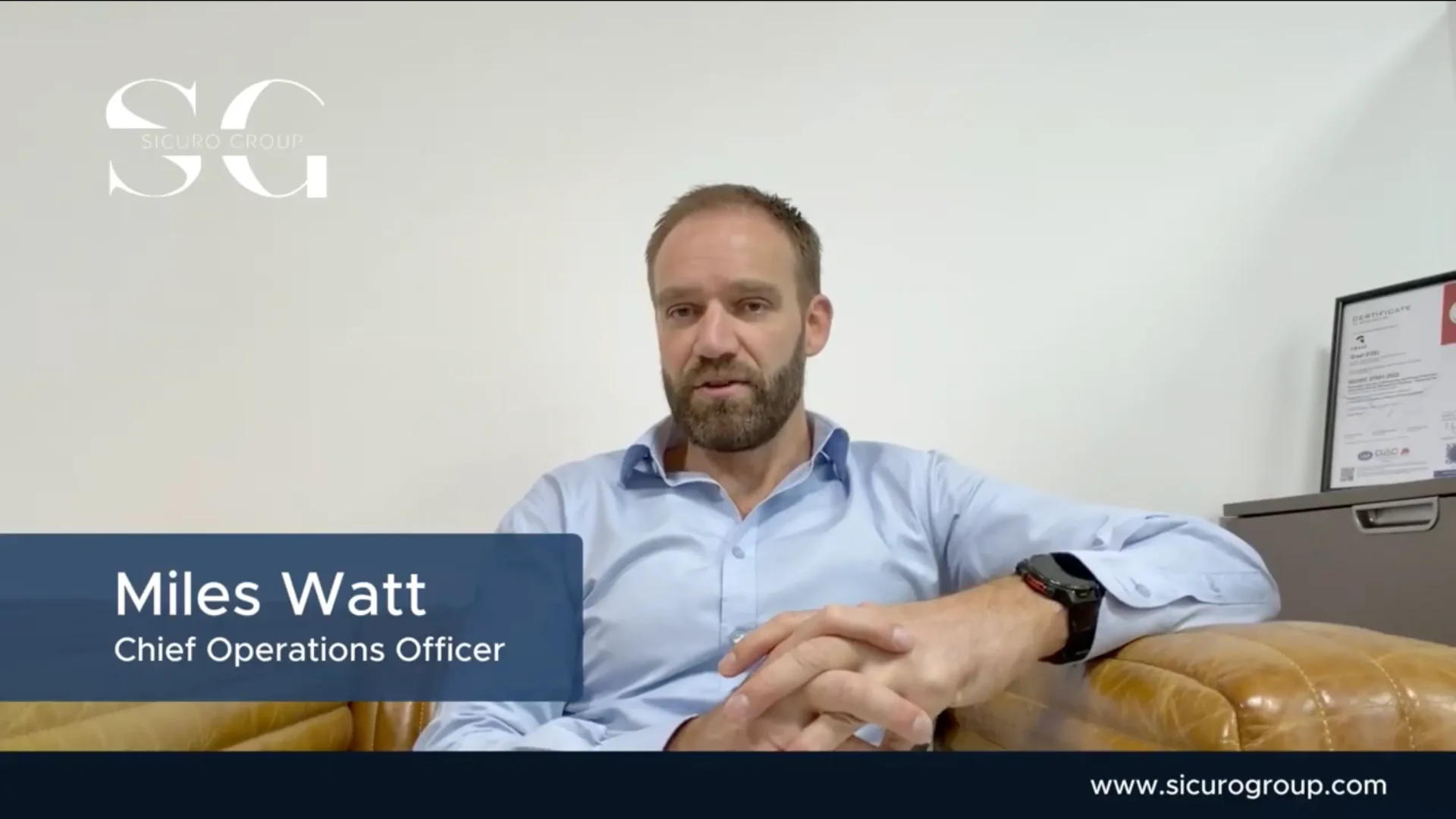
More recently, a flight bound for Tel Aviv was forced to divert and land in Saudi Arabia after a serious security incident. It prompted me to record a short video on how organizations should respond. The incident was a reminder that disruption does not always come from where you expect. A flight diversion is not a "crisis" in the traditional sense. Yet any organization with an employee on board suddenly had urgent questions. Where are our people? Who is receiving them? What do they need next? Who speaks to their families, and who speaks to the rest of the company?
I cover the immediate response in the video below. I would encourage anyone with a traveling workforce to watch it.
The core points are simple. Know where your people are, whether through traveler tracking or itinerary data from your travel management company. Convene your crisis management team quickly, and include HR, legal, senior decision-makers, and the travel team. Keep a time-stamped log of what you discussed, decided, and did. Communicate early with the affected travelers and with the wider organization, because silence is quickly filled by rumor. (A well-prepared emergency communication system makes this far easier.) Then close out properly, with continued support for anyone who may be affected by stress or trauma later, and a review of what to improve.
Every one of those steps becomes easier if a plan already exists. That is what business continuity planning provides.
What is business continuity planning, in plain English?
Business continuity is the discipline of identifying the critical products and services your organization delivers, deciding how quickly each must be recovered if disrupted, and building clear, resourced plans to recover them.
You do not need a security background to understand it. Three terms cover most of it:
- Maximum tolerable period of disruption (MTPD): how long an activity can be down before the impact becomes unacceptable.
- Recovery time objective (RTO): how quickly you intend to restore it. This must always be shorter than the MTPD.
- Mitigation: the specific, resourced measure that makes the recovery possible.
Not everything needs the same attention. Consider sending out your monthly internal news update. If it stopped, the organization could live without it for months, so its recovery time objective might be six months, and a fully detailed recovery plan is probably unnecessary. Now consider processing monthly payroll. A missed payroll creates an immediate human, legal, and reputational problem. That activity needs a short recovery time objective and a detailed plan behind it.
What does a business continuity plan actually look like?
The easiest way to see it is to follow one activity through, and I do exactly that in the second video.
Take payroll. For each resource the process depends on, the plan records a separate line item. In our example, that means seven computers, seven sets of office essentials (power, internet, and a place to work), seven ERP software subscriptions, seven payroll specialists, the payroll data itself, and communication with the bank, along with alternative arrangements.
Each line then has a defined mitigation. For the computers, it might be that seven machines of a given specification are held by the IT department in Dubai and can be issued immediately on request. The plan states who to call, which number to use, and exactly where to collect them. Every line has a named owner. Nothing relies on someone remembering what to do at 2 AM, or on the one person who knows the answer being reachable.
A mature plan may hold dozens, even hundreds, of such line items across all your priority services. That is the end state we are building toward: every critical activity has a recovery plan that is detailed, accurate, and fully resourced, with contact details attached. It is also the documentation that lets you show your board, insurers, and regulators that you took every reasonable step.
Why does this matter for HR, legal, and leadership teams?
If you are an HR or people leader, you may have inherited this responsibility without being handed a playbook. Duty of care is a people question as much as a security one. When something happens, the questions you will face are practical ones. Are our people safe? Can payroll still run? Can we show we acted properly?
Continuity planning answers those in advance. It also connects directly to travel risk management and crisis response: knowing where your people are, having a responder network able to reach them anywhere, and having a plan for the reception, care, and communication that follow an incident.
How can Sicuro Group help with business continuity planning?
Most organizations do not fail at continuity for lack of intent. They fail because the plan stays on paper. Sicuro Group's model is Consultant-Led, Operator-Delivered: we write the plan, and we are also the team that answers the phone when it is needed. Our business resilience and continuity consulting guides you through the full process: identifying your critical products and services, defining recovery time objectives, mapping every resource requirement, and building the detailed, owned, actionable recovery plans described above. We work to the discipline of ISO 22301, the international standard for business continuity management, and Sicuro Group is certified to ISO 22301:2019. We scope to solve, not to sell, so we start with what is critical now and tell you honestly what can wait.
Planning is only half of resilience. Our crisis management and emergency response capability, supported by our 24/7 Global Security Operations Center in Dubai and a vetted network covering 140+ countries, is what turns a plan into action. In the Q1 2026 Middle East departure operation, we supported approximately 4,000 people across seven countries. It is the gap between knowing and doing, and that is the gap we exist to close. One organization, one contract, one chain of accountability.
What should you do next?
If you are unsure where your organization stands, start small. Take the free ISO 22301 Audit to see how your current business continuity arrangements measure up, then get in touch and we will help you decide where to focus first.
Related reading: Travel Risk Management · Emergency Communication System · How to Build a Security Evacuation Plan

Chief Operating Officer,
Miles Watt is the Chief Operating Officer of Sicuro Group. Miles delivers operational excellence in support of the CEO’s strategy. As Sicuro Group continues to expand, he is focused on improving system to enable sustainable growth and leading the team to execute with quality and agility across Sicuro Groups core services. Miles is also driving change, developing Sicuro Group’s Response and Travel Risk Management services. Miles is dedicated to helping organizations operate with confidence in difficult environments, turning risks into opportunities for growth.