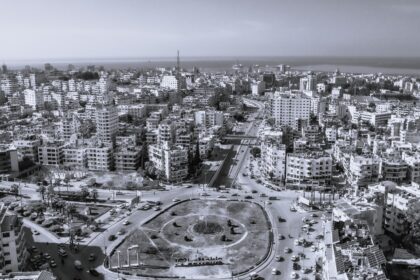
Sanctions are easing. Reconstruction demand runs into hundreds of billions. But entering the Syrian market without ground-truth intelligence and compliant operations is expensive guesswork.
We currently support several international clients conducting routine business travel into Damascus, including major consulting firms, EPCs, financial services companies, and FMCG multinationals.

Syria’s post-conflict economy is entering a stabilization phase after 15 years of sanctions impact. The new government has unprecedented international support, and reconstruction demand is estimated in the hundreds of billions.
ports, airports, roads, utilities
power generation, grid rehabilitation, renewables
SWIFT reconnection, digital payments
food security, irrigation, cold chain
Damascus already at 90%+ hotel occupancy
chronic underinvestment creates opportunity
Syria sanctions compliance is non-negotiable. Multiple layers of restrictions remain even as broad economic sanctions ease. Over-compliance by foreign banks and companies is often the real obstacle to market entry.
We are not your sanctions lawyers. We work alongside your external counsel to turn legal guidance into a practical operating model with real-world partners, banks, and controls.
The result: a Syria plan that is defensible in the boardroom and actually works on the ground.
Our experience confirms that Damascus remains relatively stable for managed travel. Risk escalates beyond Damascus, requiring additional controls and journey management protocols.

Soft-skin SUV configurations, trained drivers, English-speaking CPOs, daylight-only movements
GPS tracking, check-in protocols, emergency response capability
Paramedic support with pre-vetted hospitals and evacuation response
Scenario planning, business continuity, and contingency integration
Note on armed security: Due to licensing regulations imposed by the government, Syrian security companies are unable to carry arms or provide B6 armoured vehicles. Sicuro Group operates in full compliance. When licensing changes, we will expand services accordingly.
Foreign company registration in Syria is possible, with 100% foreign ownership permitted and no restrictions on company formation. But written law and actual enforcement are not the same thing.
Realistic timelines: For a serious corporate, 6-18 months from first discussion to initial operations is typical. Anyone promising a compliant, fully operational setup “in a few weeks” is either cutting corners or doesn’t understand the environment.
Financial risk in Syria extends beyond standard emerging-market concerns. Currency risk, banking limitations, and profit repatriation challenges require careful planning.
We help you understand and mitigate financial risks before committing capital.
Plan for a largely cash-based economy in the near term, with careful controls on FX, custody, and reconciliation.
We don’t replace your legal counsel; we give them ground truth and connect you with trusted local specialists.
Realistic timelines: For a serious corporate, 6-18 months from first discussion to initial operations is typical. Anyone promising a compliant, fully operational setup “in a few weeks” is either cutting corners or doesn’t understand the environment.
We provide end-to-end secure transportation from Beirut pickup to Damascus destination.
Current security assessment, risk ratings by region, and operational guidance for business travel to Syria, updated regularly by our team on the ground.
Commercial Operations Director

COO
Direct answers to the questions boards, general counsel, and security leaders ask about entering the Syrian market.
Everything needs rebuilding: telecommunications, power grid, oil and gas, and infrastructure. Hotels are in extreme demand with 90-100% occupancy. Logistics and transportation are critical needs. Syria could become a key transit hub from Turkey to the Gulf once sanctions are fully lifted.
The best sector for your investment depends on your risk appetite, time horizon, and existing capabilities. We help you assess risk-adjusted opportunities specific to your profile.
The Caesar Act has been repealed as of December 2025. Multiple layers of sanctions still exist, including the US State Terrorism Designation from 1979. Your home jurisdiction, ownership structure, and counterparties all matter.
We work alongside your external counsel to operationalize compliance — partner due diligence, PEP checks, sanctions screening, and documentation. We design Syria strategies your legal and compliance teams can sign off on.
100% foreign ownership is allowed with no restrictions. The limited liability company (LLC) is the most popular structure, taking approximately 20 days to establish with $5,000 minimum capital. Foreign management is permitted but requires approvals that currently take about two months.
Branch vs. local entity decisions depend on your liability preferences, tax planning, and operational needs. We connect you with vetted legal partners who understand the current registration environment.
Damascus remains relatively stable for managed travel. Risk escalates beyond Damascus, requiring additional controls.
Our approach: soft-skin SUVs with trained drivers, English-speaking close protection officers, daylight-only movements, 24/7 GSOC monitoring with GPS tracking, and pre-vetted medical and evacuation response. Due to government licensing regulations, armed security and B6 armored vehicles are not available for corporate clients.
Plan for a cash-only economy in the near term. Only two banks are currently operational for cross-border transactions. There are no legal barriers to profit repatriation, but technical and banking barriers exist.
We map viable banking routes with your treasury and sanctions counsel, help you understand cash management requirements, and can provide in-country payment for hotels and expenses to reduce the cash your team needs to carry.
It’s still a post-conflict environment. The main risks are residual political and security volatility, infrastructure gaps (power, medical care, emergency response), road safety, and checkpoints. Flights can divert due to weather; the airport isn’t equipped for rapid changes.
With proper planning, vetted routes, daylight movement, and realistic itineraries, risk can be managed for essential travel — but it will never be “low-risk Europe.” We’ve supported clients including major consulting firms and multinationals.
Sanctions relief is explicitly reversible, and the political landscape is not settled. Any responsible plan assumes the possibility of snap-back, renewed conflict, or regime change.
We build scenario playbooks with clear triggers: when to pause travel, shut down operations, move assets, or execute evacuations. You get a pre-agreed unwind strategy rather than improvising under pressure.
A short, agenda-led call with your core stakeholders: strategy, security, legal/compliance, and regional leadership. You outline your objectives, constraints, and time horizon; we outline what’s realistic and where we see red flags.
From there, we either agree a structured discovery and briefing phase or we tell you plainly that Syria doesn’t fit your current profile. We turn away work where we don’t think the risk/return makes sense for you.
If you’re serious about foreign investment in Syria in the next 6-18 months, the work starts now — long before your first senior delegation flies into Damascus.

Practical guidance for compliance, travel operations, and duty of care before your first trip.
Share your footprint, sector focus, and timeline. We’ll tell you candidly whether Syria makes sense for you — and if so, how to do it properly.
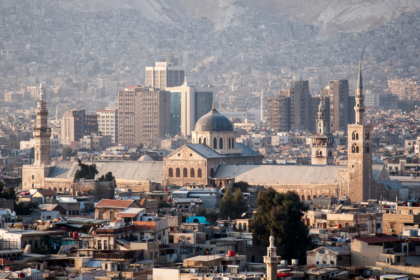

Looking at Syria for 2026? Join legal, commercial, and risk experts with first-hand experience inside the market today. Hear directly from those operating in Damascus