


last updated: Jul 7, 2026
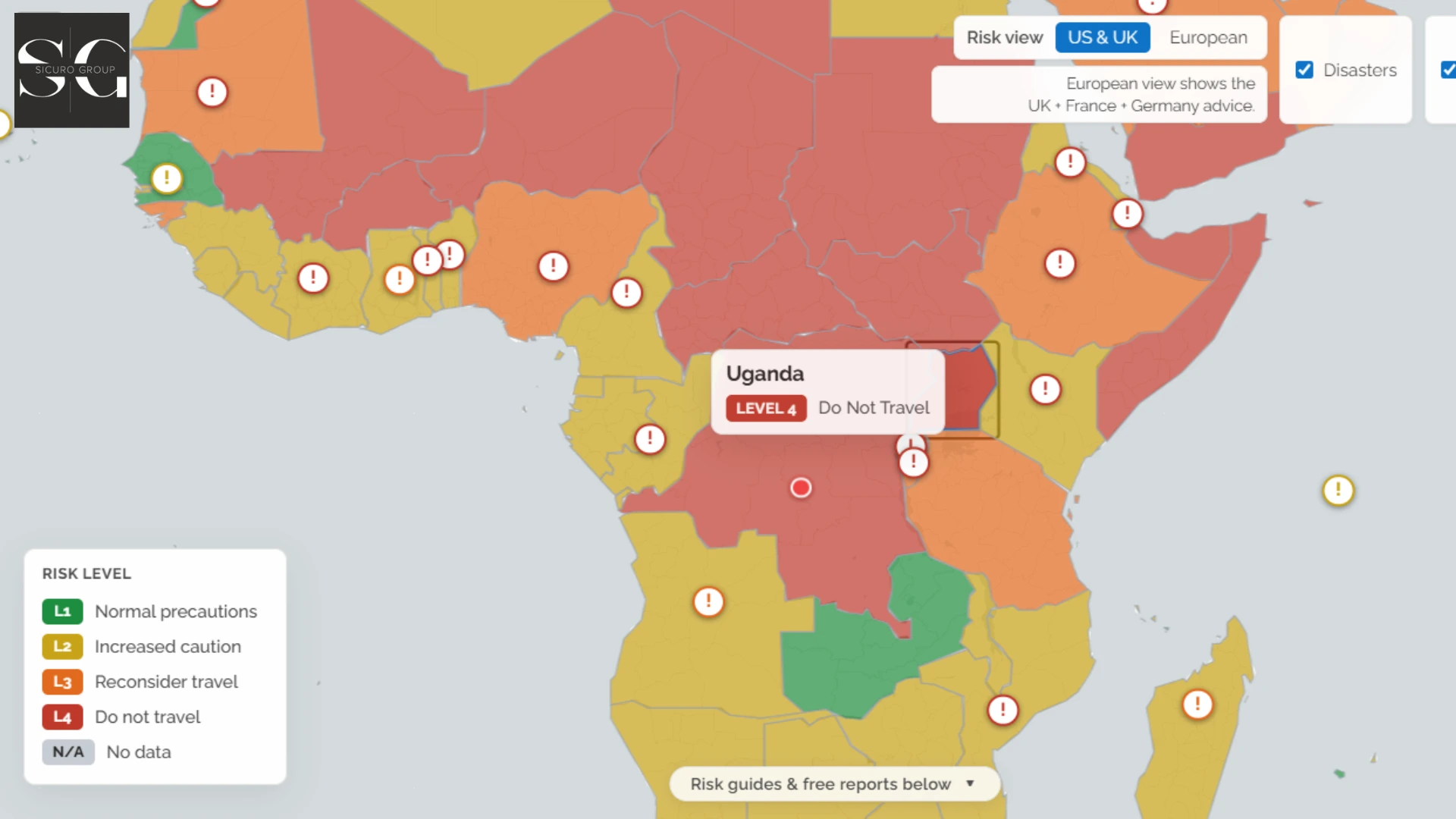
For live travel risk data and updates, visit the Free Travel Risk Map
Is Uganda Safe?
For the visitor economy that actually exists, Kampala business travel, Entebbe arrivals, the gorilla and chimpanzee trekking circuits, the western parks, and the oil corridor taking shape around Lake Albert, Uganda is broadly safe to visit, with discipline, and with more edges than the tourist brochures admit.
So, is Uganda a safe country? For most visitors following the established routes, yes. But the answer is conditional. Uganda rewards structured travel, vetted transport, reputable operators, and live awareness of politics, borders and health events.
Uganda carries an elevated advisory level at the time of writing, reflecting urban crime, periodic political tension and border-region caveats rather than any general hostility to visitors.
The election season running into early 2026 has added the demonstration risk that every Ugandan political cycle brings.
The live map carries the current picture.
Uganda Safety and Security
Kampala’s daily risks are urban and practical: phone and bag snatching, including by boda-boda riders in motion, burglary, vehicle break-ins, and the road itself, which does more harm than all crime combined.
Boda-bodas, the motorcycle taxis that move the city, are the single largest injury risk a visitor can voluntarily accept; vetted cars and apps exist for a reason.
Terrorism is a background layer with history. The ADF claimed attacks including the 2021 Kampala bombings and periodic incidents near the DRC border since, and security at hotels and venues reflects it.
Political demonstrations around the electoral period can turn confrontational fast, and the standing rule applies: distance, always.
Uganda’s laws on homosexuality are among the world’s harshest, and LGBTQ travellers face legal exposure that must be weighed squarely before any trip.
Is it safe to travel to Uganda?
Download the free ISO 31030-aligned Uganda risk report on the Sicuro Live Travel Risk Map, updated every 30 minutes from US State Department, UK FCDO, GDACS and WHO sources.
Safety by region (Kampala and Entebbe)
Kampala and Entebbe run the urban profile above.
Kampala is workable with city discipline: vetted transport, no bodas, valuables invisible, and distance from demonstrations, especially in election season.
Entebbe is generally the easier entry point: airport logistics, lakeside hotels, and a calmer operating environment than Kampala. The risks are still practical rather than strategic, road movement, opportunistic theft, and the need to use vetted transfers.
The southwestern gorilla circuits, Bwindi and Mgahinga, operate inside a professionalised tourism economy with armed ranger escorts as standard since the region’s hard lessons decades ago. The adjacent DRC border is the reason for the architecture, and the architecture works.
The western parks and the oil corridor function normally with remoteness as the main factor.
The northeastern Karamoja region carries armed cattle-raiding dynamics and specific advisories.
The DRC border zone north of the parks deserves the live picture before any travel.
Is Kampala safe?
Kampala is generally safe for visitors who follow basic urban security discipline. Uganda’s capital carries the typical risks of a major East African city: phone and bag snatching, vehicle break-ins, burglary, and road-related incidents. The biggest practical risk is transport, particularly boda-bodas, which are best avoided by visitors. Using vetted drivers or trusted ride-hailing services, keeping valuables discreet, and avoiding demonstrations are the standard precautions, especially during politically sensitive periods.
Is Entebbe safe?
Entebbe is generally considered one of Uganda’s easier places for visitors to navigate. As the country’s main international arrival point, it has a strong tourism and business infrastructure, with airport transfers, hotels and lakeside areas operating normally. The main concerns remain practical rather than strategic: road safety, opportunistic theft and using reliable transport providers. For many travellers, Entebbe provides a calmer base than Kampala while still offering easy access to the airport and surrounding attractions.
Ebola Risk in Uganda
Uganda has recorded Ebola outbreaks, most recently the Sudan-strain outbreak declared over in 2025, and has built one of Africa’s most practised response systems in the process.
The honest framing: outbreaks are episodic, geographically contained, met with rapid response, and have never made ordinary business or tourism travel a transmission story.
The health picture that actually concerns travellers is the usual East African set: malaria countrywide and prophylaxis essential, yellow fever certification required, and medical capability concentrated in Kampala with evacuation cover the standard answer for anything serious.
Uganda Safety by Traveller Type
Business travellers base in Kololo, Nakasero or the Entebbe corridor, use vetted cars rather than bodas, and find a relationship-driven, English-speaking commercial culture.
Trekkers and tourists are safest inside the permit-and-operator system, which handles security by design.
Women travelling alone report Kampala as standard East African urban discipline.
American and British travellers face no targeting dimension; the advisory caveats are regional and behavioural, and the LGBTQ legal exposure is the one item that overrides everything else for affected travellers.
Frequently Asked Questions
Yes, for normal airport arrivals, hotel stays and onward movement, provided transfers are vetted and valuables stay discreet. Entebbe is calmer than Kampala, but road and petty-crime discipline still applies.
Sicuro Group supports clients across East Africa with intelligence, vetted transport and journey management, traveller tracking with 24/7 GSOC monitoring, medical evacuation coordination, and SicuroResponse crisis membership.
Check the live Uganda risk level , talk to a Sicuro advisor , or call the 24/7 line on +971 4 362 6378.