

last updated: Jul 13, 2026
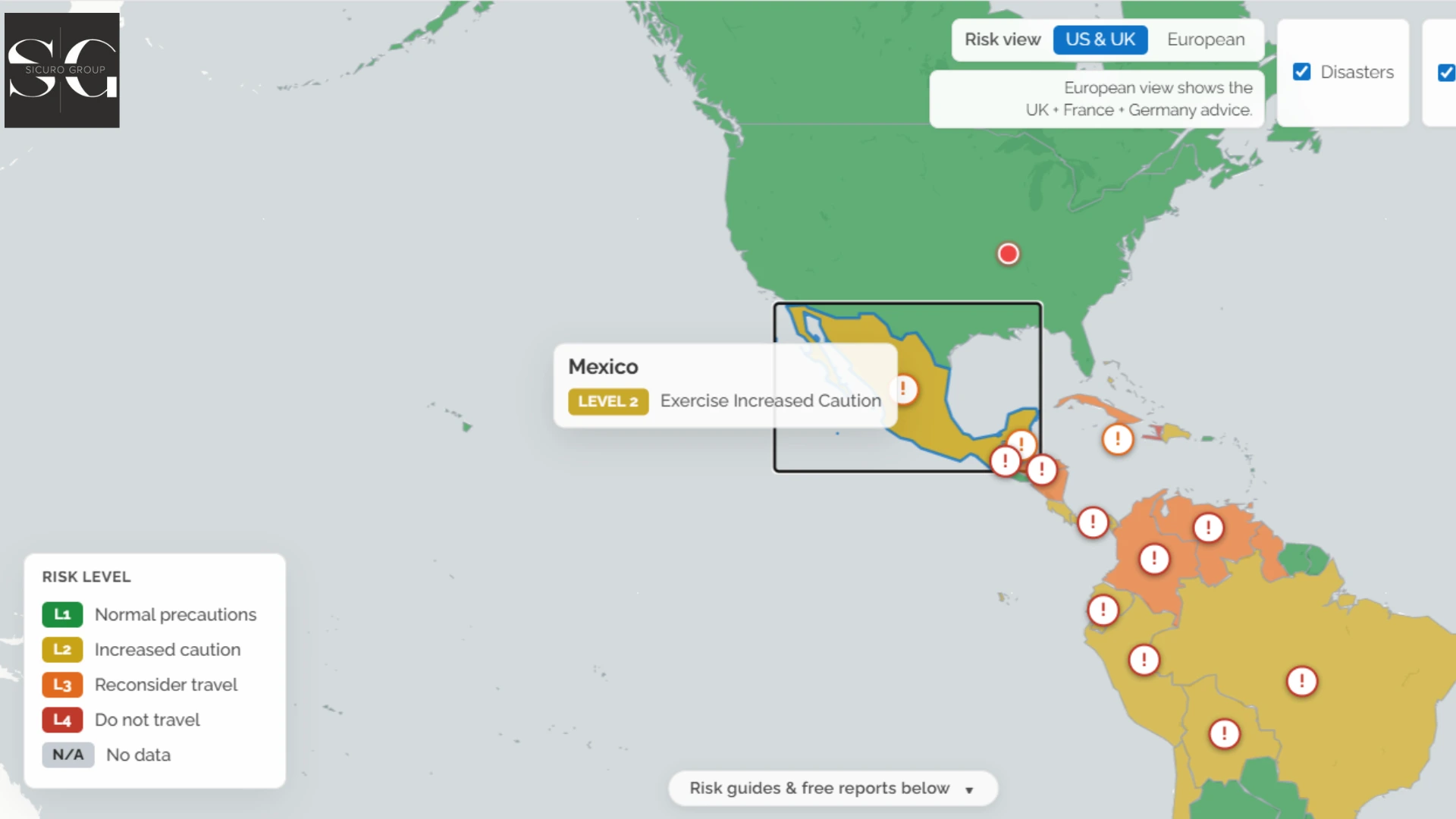
For live travel risk data and updates, visit the Free Travel Risk Map
Is Mexico City safe?
For most business travellers, in most of the places business actually happens, yes, with structure. Mexico hosts millions of foreign business trips a year, the overwhelming majority without incident, and the commercial centres function like major cities anywhere. It is also a country where security conditions change dramatically from one state to the next, where organised crime is a structural fact, and where the difference between a routine trip and a serious problem is usually planning. Both halves of that answer are true at once, and the travellers who get Mexico wrong are the ones who heard only one of them.
Is Mexico Safe to Travel? The Security Picture by Region
Mexico cannot be assessed as one place. Mexico City’s business districts, Polanco, Santa Fe, Reforma, carry big-city risks: street crime, express kidnapping in unregulated taxis, occasional armed robbery. Managed with vetted transport and sensible hotel choices, executives work there for years without trouble. Monterrey and Guadalajara, the other corporate anchors, run similar profiles. The beach corridors of Cancun and Los Cabos remain heavily protected by their economic importance, though cartel incidents have touched both.
The serious risk sits where organised crime contests territory: parts of Tamaulipas, Guerrero, Michoacan, Sinaloa, Zacatecas, Colima and the borderlands see the violence that makes headlines, and several states sit under the strictest government advisories. Cartel violence is mostly directed at rivals and authorities rather than foreign businesses, but bystander exposure, roadblocks and kidnapping are real in contested areas. The operating rule is simple: risk in Mexico is a function of where you are and how you move. Road journeys between cities, after dark especially, generate more serious incidents involving foreigners than anything else..
Is Monterrey Mexico safe?
Yes. Monterrey is one of Mexico’s principal business centres and shares a similar risk profile to Mexico City. Most visits are completed without incident, although normal urban precautions and careful planning for road movements remain advisable.
Is Cabo Mexico safe?
Yes. Los Cabos remains one of Mexico’s most economically important tourism corridors and is heavily protected as a destination that receives millions of international visitors. Travellers should still maintain routine precautions and monitor local conditions.
Is Tulum Mexico safe?
Yes. Tulum remains one of Mexico’s most visited resort destinations and most trips are completed safely. Like other tourism centres in Mexico, visitors should remain aware of their surroundings and rely on planned transport rather than improvisation.
Is Oaxaca Mexico safe?
Yes. Oaxaca City and the state’s main tourism areas operate with a lower risk profile than Mexico’s contested regions. Standard travel precautions and awareness of local developments remain sensible measures.
Is Puebla Mexico safe?
Yes. Puebla is a major commercial and cultural centre that generally presents ordinary urban crime risks rather than the levels of organised violence seen in Mexico’s contested states.
Is La Paz Mexico safe?
Yes. La Paz maintains a comparatively calm security profile and remains one of the more stable destinations in Baja California Sur. Routine precautions and monitored transport arrangements remain advisable.
Is it safe to travel to Cozumel Mexico?
Yes. Cozumel is one of Mexico’s established resort destinations and receives large numbers of international visitors safely every year. The same operating rule applies: stay aware of local conditions and use trusted transportation and accommodation providers.
Is Mexico safe to travel right now?
Download the free ISO 31030-aligned Mexico risk report on the Sicuro Live Travel Risk Map, updated every 30 minutes from US State Department, UK FCDO, GDACS and WHO sources.
Health and Practicalities
Private healthcare in Mexico City, Monterrey and Guadalajara is excellent, with hospitals serving an international clientele; outside the major centres capability drops fast, which matters for industrial sites and coastal projects. The same pattern broadly applies to destinations such as Los Cabos, La Paz, Puebla and Oaxaca City, where medical capability is generally good but becomes more limited in remote areas. Standard precautions cover food and water. Altitude in Mexico City affects some travellers for a day or two. No exotic disease risk troubles the ordinary business itinerary.
Stay in the established business districts, use hotel or pre arranged transport rather than street taxis, and let app based services with tracked journeys replace improvisation. The same discipline applies in Mexico City, Monterrey, Los Cabos, Tulum and other major destinations. Keep road moves to daylight on toll highways. For routine trips to the main centres, that discipline is most of the programme.
Is Mexico Safe for doing Business?
Mexico is a top-tier manufacturing and nearshoring economy with deep commercial law and sophisticated counterparties. The frictions are known: corruption exposure in permits, policing and local government; extortion pressure on businesses in contested states, which has touched foreign-owned operations; and a justice system that resolves little, which makes prevention the only strategy worth funding. Supply chains that cross contested territory need route risk management as a standing function, and site selection for new plants should weigh state-level security as hard as labour costs.
Frequently Asked Questions
Yes, with normal big-city discipline: vetted transport, established districts, no street taxis, low profile. Thousands of foreign executives work there daily.
Express kidnapping, short abductions to drain cards, is the realistic urban risk, usually via unregulated taxis. Targeted kidnap of foreign executives is rare and concentrates in contested states. Transport discipline removes most of the exposure.
Currently the highest-advisory states, several in the north and Pacific corridors, justify avoidance without a specific reason and a security plan. Check the live map before every trip, because levels move.
On major toll roads, in daylight, generally yes. Long road moves through contested states are where serious incidents concentrate; fly between regions where the option exists.
The main resort corridors remain heavily protected and serve millions safely. The same geography rule applies: the picture is local, so check current levels for the specific state.
Sicuro Group supports travellers and operations in Mexico with pre-travel intelligence briefings, vetted secure transportation and executive protection, traveller tracking with 24/7 GSOC monitoring, medical and security response, and SicuroResponse crisis membership with a pre-authorised credit line that activates the moment you decide to move.
Check the live Mexico risk level before you book. To put support in place before the trip, talk to a Sicuro advisor or call the 24/7 line on +971 4 362 6378.