


last updated: Jul 28, 2026
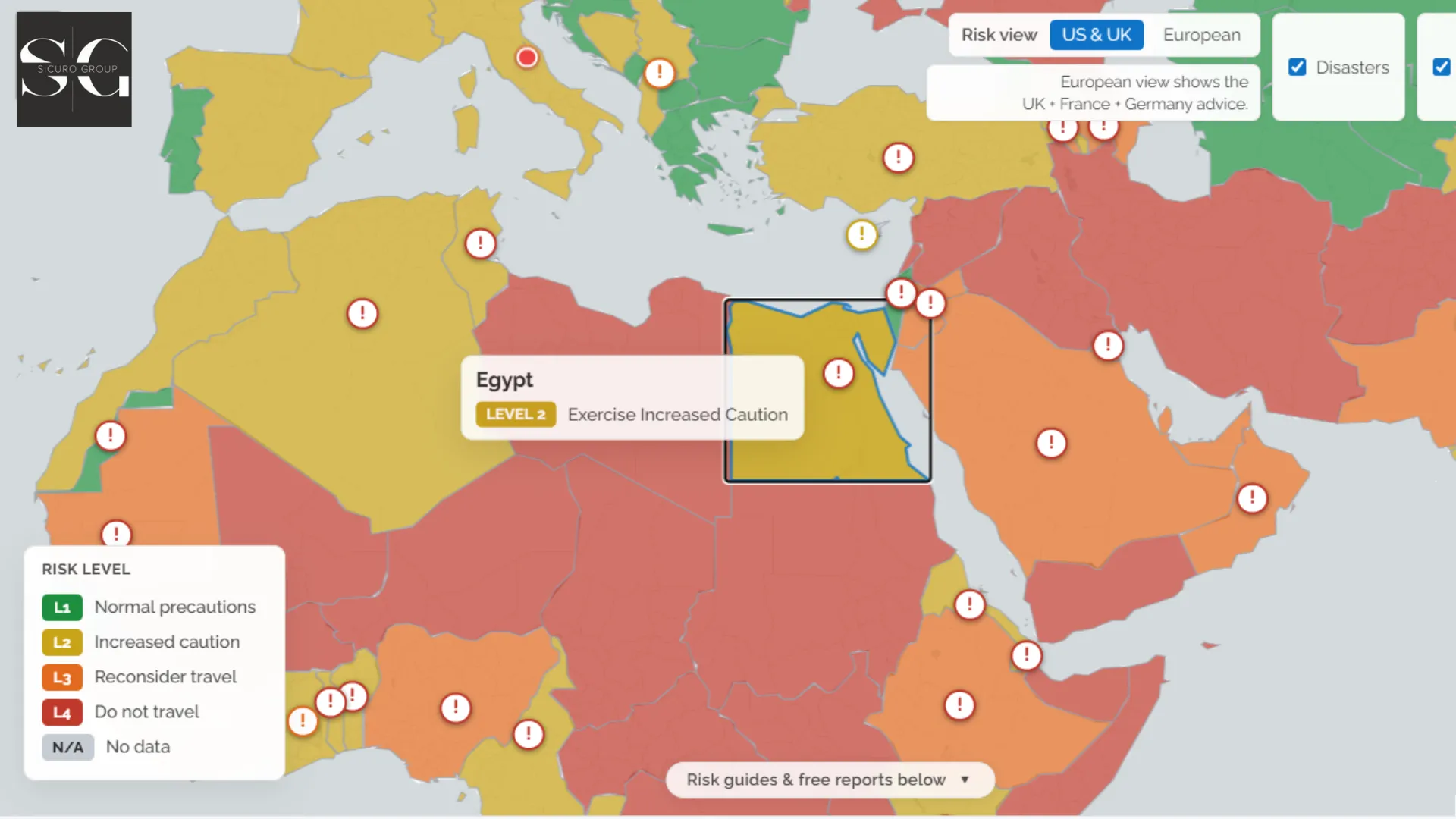
For live travel risk data and updates, visit the Free Travel Risk Map
Is it safe to visit Egypt?
For the corridor where almost all foreign visits happen, Cairo’s main districts, the Red Sea resorts, Luxor and Aswan, the answer has been yes for years, sustained by a state that polices its tourist economy as the strategic asset it is. Egypt’s honest risk story is about its other geographies: the restricted zones where an insurgency was fought, the borders that adjoin live conflicts, and the pressures of a 110-million-person economy in permanent fiscal strain. Which Egypt your trip touches decides everything, and at the time of writing the country carries an elevated advisory level; the live map shows the current picture.
The Security Picture
Crime against foreigners in the visited corridor is dominated by hassle rather than danger: aggressive vendors, scams, taxi games, occasional harassment. Violent crime targeting visitors is rare, and the security presence around tourist infrastructure is heavy and deliberate. Terrorism risk has fallen substantially from its 2013 to 2017 peak, when church and tourist attacks shaped the country’s reputation, but it has not vanished; the state’s counterterrorism posture remains intensive for a reason.
Demonstrations are rare and risky to be near, since the state’s tolerance for them is low and its response sweeping. Regional spillover is the 2026 variable: Gaza next door, Red Sea shipping attacks affecting Suez traffic, and the wider conflict’s pressure on Egyptian airspace and politics. None of it has changed street-level conditions in the visited corridor; all of it belongs on a watchlist.
Is it safe to travel to Egypt now?
Download the free ISO 31030-aligned Egypt risk report on the Sicuro Live Travel Risk Map, updated every 30 minutes from US State Department, UK FCDO, GDACS and WHO sources.
Safety by Region
Greater Cairo, Alexandria, the Nile cities of Luxor and Aswan, and the Red Sea coast from Hurghada to Sharm el Sheikh form the managed corridor, with security designed around visitors. North Sinai remains a restricted military zone, closed to travel and excluded from any sensible itinerary; the distinction between South Sinai’s resorts and North Sinai’s exclusion zone is the most important geography lesson in Egyptian travel.
The Western Desert near the Libyan border carries trafficking and residual militant risk and requires permits and judgement. The practical rule: stay in the corridor, fly between regions rather than driving long desert roads, and treat anything border-adjacent as a planned operation rather than a detour.
Is Cairo safe right now?
The main districts, yes, with big-city awareness and transport discipline. The realistic daily risks are traffic and scams rather than violence. Check the current level before travel.
Is Sharm el Sheikh safe?
The South Sinai resorts run heavy, layered security and have operated safely for years. They sit in a different world from North Sinai, which remains closed and should stay off every itinerary.
Safety by Traveller Type
Business travellers will find Cairo demanding but workable: base in Zamalek, Garden City, New Cairo or the Smart Village business districts, use hotel cars or app-based transport rather than street taxis, and budget patience for the city’s traffic, which is the most dangerous thing most visitors encounter.
Women travelling alone face harassment levels above the regional average in crowded public spaces; hotel transport, considered dress and a firm manner reduce it, and the resort areas run far gentler.
American and British travellers are processed through a normal e-visa regime and welcomed; the practical issues are bureaucratic, not hostile. Photography near anything military or infrastructural draws genuine trouble and the definition is broad.
Frequently Asked Questions
The resorts and managed sites, broadly yes. Crowded urban spaces carry real harassment exposure; private transport and hotel-district basing manage most of it.
Yes, in the visited corridor. Register travel, keep cameras away from anything official, and avoid the rare demonstration entirely, since the state’s response does not distinguish bystanders.
Not for the standard corridor itinerary. Business operations outside the corridor, desert and border-adjacent projects, and high-profile visits justify journey management, tracked movement and a response arrangement. Energy and infrastructure clients in remote areas should treat security as site infrastructure.
Sicuro Group supports clients across North Africa with pre-travel intelligence, journey management and secure transport, traveller tracking with 24/7 GSOC monitoring, and SicuroResponse crisis membership with a pre-authorised credit line.
Check the live Egypt risk level, talk to a Sicuro advisor, or call the 24/7 line on +971 4 362 6378.