


last updated: Jul 15, 2026
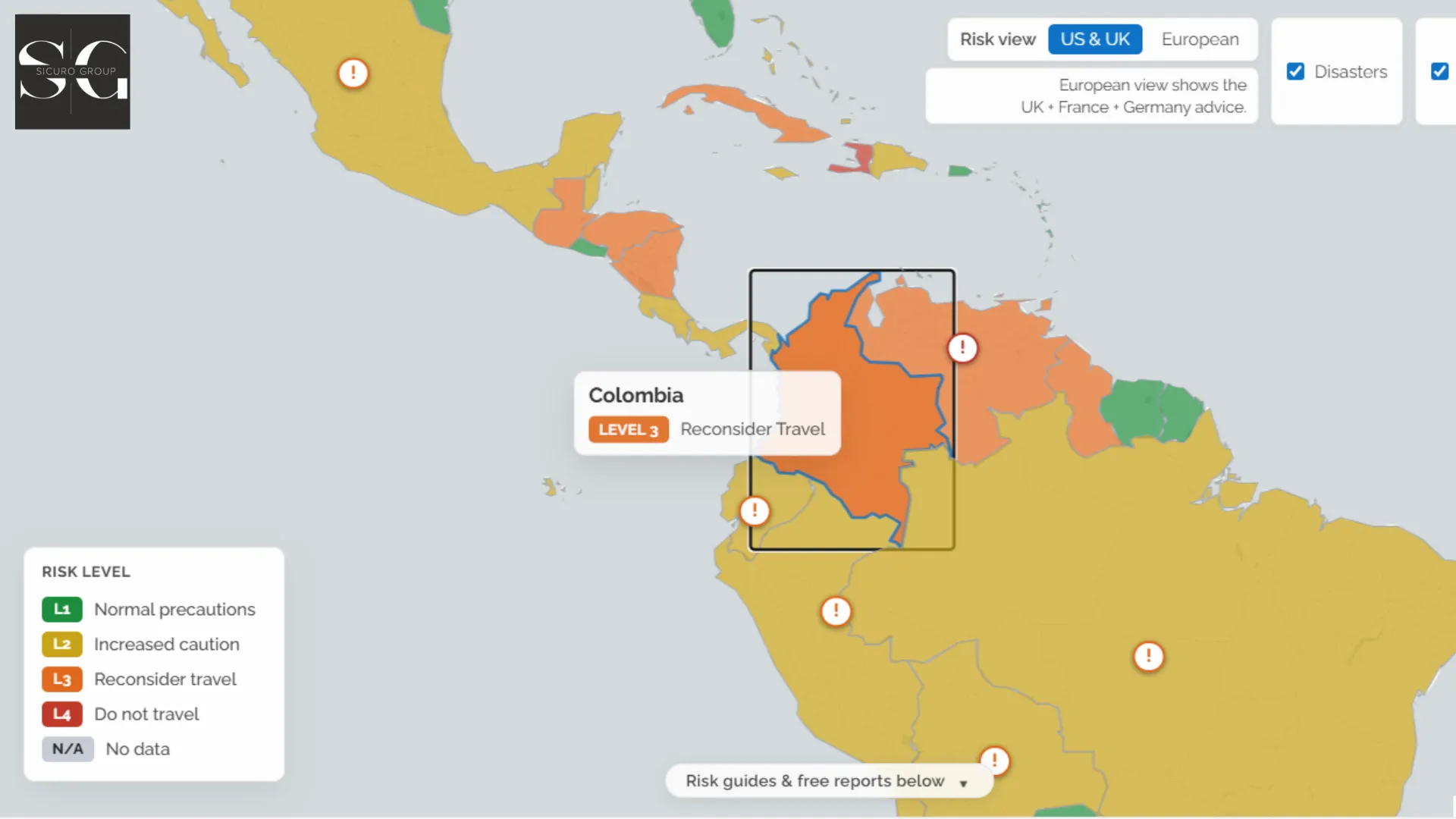
For live travel risk data and updates, visit the Free Travel Risk Map
Is it safe to travel to Colombia?
The country has travelled an enormous distance from its 1990s reputation, and the honest answer holds two truths: Bogota, Medellin and Cartagena host a thriving international business and digital-nomad economy on ordinary big-city terms, while swathes of rural and border Colombia remain contested by armed groups in ways that put them under explicit advisories. The city picture and the territory picture are different countries, and at the time of writing Colombia carries an elevated advisory level reflecting the second; the live map has the current picture.
The security picture
Urban risk centres on street robbery, phone snatching, and the distinctive Colombian category of incapacitation crime: scopolamine and similar drugs administered through drinks, food or contact, used to rob victims rendered compliant, with dating apps the documented vector for targeting foreign men, a pattern serious enough that consulates have issued specific warnings after deaths in Medellin. Express kidnapping via unregulated taxis persists, solved by app transport. The territorial picture is separate: ELN, FARC dissidents and criminal organisations contest rural zones, the 2025 and 2026 security deterioration has been real, and border regions with Venezuela and Ecuador, plus the Pacific coast departments, sit under hard advisories. Kidnapping nationally has risen from its lows; its geography remains overwhelmingly rural and road-based.
Is Colombia safe?
Download the free ISO 31030-aligned Colombia risk report on the Sicuro Live Travel Risk Map, updated every 30 minutes from US State Department, UK FCDO, GDACS and WHO sources.
Safety by region
Bogota’s north and business corridors, Medellin’s El Poblado and Laureles, Cartagena’s walled city and Bocagrande, and the coffee axis run the visitor economy on managed terms. Cali carries a higher baseline. The hard map is rural: Arauca, Norte de Santander including the Catatumbo region, Cauca, parts of Narino, Choco and the Venezuelan border zone are armed-group territory where the advisories are blunt and correct. Intercity road travel through contested departments is the exposure that catches the unwary; fly between cities, as Colombians who can, do.
Is Medellin, Colombia safe?
El Poblado, Laureles and the metro spine, yes, on big-city terms, with the dating-app and drink risks taken seriously. The city’s transformation is real and so are its remaining edges.
Is Bogota, Colombia safe?
The northern business districts, yes, with app transport and phone discipline. Avoid displaying anything worth snatching.
Is Cartagena, Colombia safe?
Yes. Cartagena is one of Colombia’s safest and most tourist friendly cities. The Walled City, Getsemaní, and Bocagrande have a strong police presence and low violent crime, though petty theft can happen. Stay in well known areas, use trusted taxis or rideshares at night, and keep an eye on your belongings.
Is Santa Marta, Colombia safe?
Yes. Santa Marta is one of Colombia’s main tourist destinations. El Rodadero, Pozos Colorados, and Tayrona National Park are generally safe for visitors. The main risks are petty theft and drink spiking in nightlife areas. Avoid higher crime neighborhoods, do not walk alone at night, and book tours through reputable operators.
Is Barranquilla, Colombia safe?
Yes. Barranquilla is generally safe for visitors, especially in northern areas like El Prado, Alto Prado, and Riomar. The main risk is petty theft, particularly in busy areas and during Carnival. Keep valuables out of sight, use rideshares at night, and avoid unfamiliar neighborhoods.
Is Cali, Colombia safe?
Cali requires more caution than Cartagena, Medellín, or Bogotá. The city has seen increased terrorist activity and an unstable security situation. Stay in well known areas, avoid the surrounding countryside and major highways, use trusted transport, and monitor local news before and during your visit.
The dating-app problem
It deserves its own heading because it is the most distinctive risk foreign men face in urban Colombia. The pattern: a match, a meeting, a drink, then waking robbed, and in the worst cases not waking. The mitigations are unromantic and effective: meet in public, watch drinks poured, tell someone, never relocate to private premises early, and treat unusual drowsiness as an emergency. Hotels and serviced apartments with access control do quiet work here.
By traveller type
Business travellers run app transport door to door, base in the established districts, and find a professional environment that has earned its renaissance reputation. Women travelling alone report the main destinations as manageable with standard discipline; the scopolamine vector targets men more often, but the drink rules apply to everyone. American travellers are numerous and welcome; the State Department’s regional carve-outs are the itinerary boundaries, and they are specific for good reasons.
Frequently Asked Questions
The established circuits, yes. The advisory departments and border zones are not tourist territory under any framing.
Yes, Americans are generally safe in Colombia’s major cities and tourist destinations. However, don’t ignore travel advisories for rural areas, and avoid driving or taking long-distance buses through those regions. Flying between cities is often the safer choice.
Not for the urban business circuit. Any operation touching rural or border departments, extractives, agriculture, infrastructure, requires journey management, intelligence and response arrangements as standing infrastructure.
Sicuro Group supports clients across Latin America with pre-travel intelligence, vetted transport and journey management, traveller tracking with 24/7 GSOC monitoring, kidnap prevention planning, and SicuroResponse crisis membership.
Check the live Colombia risk level, talk to a Sicuro advisor, or call the 24/7 line on +971 4 362 6378.